
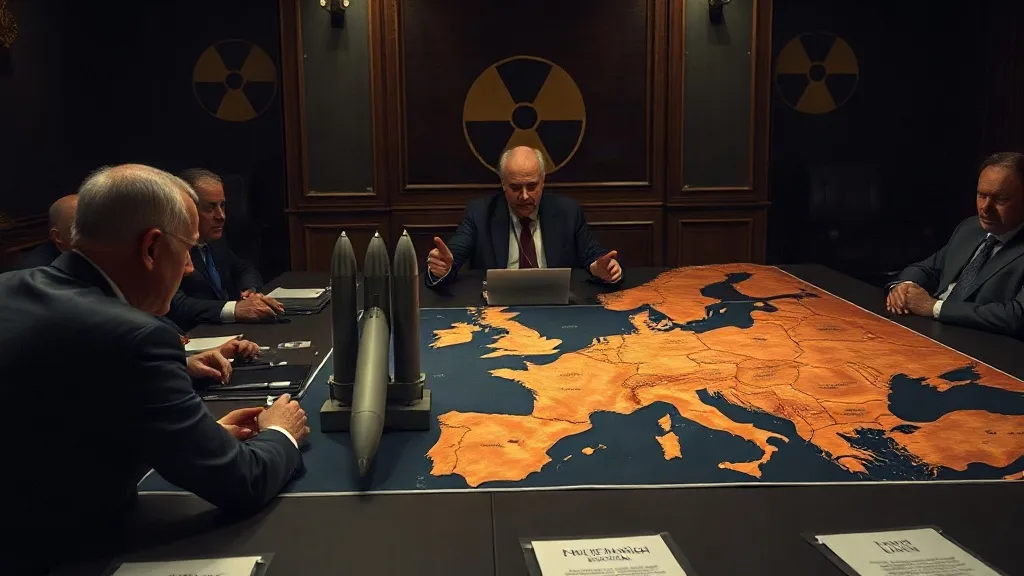
When France's defense minister publicly urged Berlin to spell out the conditions under which German long-range missiles might strike targets inside Russia, it was more than a diplomatic nudge. It was a warning about the nuclear risks that lurk behind vague targeting doctrines. The request, reported this week, puts a spotlight on a quiet but critical debate within NATO: how to give Ukraine the tools it needs without crossing thresholds that could trigger catastrophic retaliation.
At the heart of the issue is the transfer of long-range precision weapons to Ukraine. Germany has been reluctant to supply its Taurus cruise missiles, fearing they could be used to hit deep inside Russian territory. France, which has already provided SCALP missiles, now wants Berlin to clarify its rules of engagement. Paris argues that ambiguity not only undermines deterrence but also increases the risk of miscalculation. If Moscow believes that German-supplied weapons could strike sensitive targets without warning, it might respond more aggressively, potentially even with nuclear threats.
The Nuclear Dimension of Conventional Strikes
The French concern is rooted in a simple but chilling logic: Russia's nuclear doctrine allows for the use of nuclear weapons in response to a conventional attack that threatens the existence of the state. If Ukraine uses Western long-range missiles to strike strategic targets such as early-warning radars or command bunkers, Moscow could interpret that as a precursor to a decapitation strike. In such a scenario, the threshold for nuclear use might be crossed inadvertently.
By asking Germany to clarify its targeting criteria, France is trying to establish a common understanding within NATO. The goal is to ensure that all Allies share the same red lines and that Ukraine's use of long-range weapons is coordinated to avoid triggering a nuclear response. This is not about limiting Ukraine's ability to defend itself, but about managing escalation in a way that keeps the conflict from spiraling out of control.
French officials have stressed that transparency in targeting doctrine is essential to prevent miscommunication. They point out that Russia has repeatedly used nuclear rhetoric as a tool of coercion, and that the West must respond with unity and clarity. Germany's reluctance to provide Taurus missiles and its vague statements on targeting have therefore become a source of frustration in Paris.
Germany's Balancing Act
Berlin finds itself in a difficult position. Chancellor Olaf Scholz has publicly ruled out sending Taurus missiles, arguing that doing so would risk direct conflict with Russia. His stance is shaped by Germany's history and a deep-seated pacifist strain in public opinion. However, critics argue that Germany's caution is undermining European security and emboldening Moscow.
The French request puts Germany in a bind. On one hand, Berlin wants to maintain its reputation as a reliable ally and a leader in Europe. On the other hand, it fears that any clarification of targeting rules could be seen as an escalation. The German government has so far avoided detailed discussions on the matter, citing operational security. But as pressure mounts, silence may no longer be an option.
Behind the scenes, NATO officials are working to develop a common framework for long-range strikes. The aim is to ensure that Allies coordinate their efforts and that Ukraine receives the support it needs without provoking Russia. This involves sharing intelligence, setting clear guidelines for target selection, and maintaining open channels of communication with Moscow to reduce the risk of misunderstanding.
Implications for European Security
The Franco-German disagreement over long-range missiles is more than a bilateral spat. It reflects a broader debate about Europe's role in the conflict and its willingness to confront Russia. France has positioned itself as a hawk on the issue, advocating for a more robust response to Russian aggression. Germany, meanwhile, has been more cautious, prioritizing dialogue and de-escalation.
This divide could have long-term consequences for European defense cooperation. If France and Germany cannot agree on such a fundamental issue, it may hinder efforts to build a common European defense policy. It also sends a mixed message to Moscow, which may interpret Western hesitancy as weakness.
Moreover, the nuclear risk is not hypothetical. Russia has repeatedly conducted exercises simulating nuclear strikes and has stationed tactical nuclear weapons in Belarus. The West's ability to manage escalation depends on clear communication and a shared understanding of red lines. France's push for clarity is therefore a necessary step, even if it creates short-term friction.
What Happens Next?
The ball is now in Germany's court. Paris has made its request, and Berlin must decide how to respond. Options include providing a general statement of principles, sharing more details with Allies in classified settings, or continuing to stonewall. Each choice carries risks.
If Germany remains opaque, it risks further eroding trust with France and other Allies. If it provides too much detail, it may be accused of giving Russia a roadmap. The most likely outcome is a compromise: Germany will offer private assurances to France and NATO while maintaining public ambiguity. But that may not be enough to satisfy Paris, which wants a public commitment to shared rules.
Ultimately, the debate over long-range missiles is a test of Western unity. The challenge is to support Ukraine effectively while preventing a wider war. France's pressure on Germany is a reminder that in the nuclear age, clarity is not a luxury but a necessity.
Frequently Asked Questions
Why is France asking Germany to clarify its targeting rules for long-range missiles?
France wants to ensure that all NATO Allies have a common understanding of when and how Ukraine can use long-range weapons against targets in Russia. Without clear rules, there is a risk that a strike on a sensitive target could be misinterpreted by Moscow as a precursor to a nuclear attack, potentially triggering retaliation. France believes that transparency reduces the risk of miscalculation and helps maintain deterrence.
What specific missiles are involved in this debate?
The discussion centers on long-range precision-guided missiles such as the German Taurus KEPD 350 and the French SCALP (Storm Shadow). These missiles have a range of over 250 kilometers and can strike deep behind enemy lines. Germany has so far refused to supply Taurus missiles to Ukraine, while France has provided SCALP missiles.
How could the use of long-range missiles trigger a nuclear response from Russia?
Russia's nuclear doctrine allows for nuclear use in response to a conventional attack that threatens the existence of the state. If Ukraine uses Western missiles to strike strategic targets like early-warning radars or command centers, Moscow might perceive this as an attack on its nuclear command and control, potentially justifying a nuclear response. The risk is heightened if the targeting appears to be coordinated by NATO.
What is Germany's position on supplying long-range missiles to Ukraine?
Germany has been reluctant to provide Taurus missiles, citing the risk of escalation and direct involvement in the conflict. Chancellor Olaf Scholz has publicly ruled out sending the missiles, arguing that it could lead to a dangerous escalation. However, Germany has provided other military aid and is under pressure from Allies to do more.
How does this debate affect NATO unity?
The debate highlights a divide between Allies who favor a more robust response to Russia (like France and the UK) and those who are more cautious (like Germany). If not managed carefully, this disagreement could undermine NATO's cohesion and its ability to present a united front against Russian aggression. However, it also presents an opportunity for Allies to develop a common strategy for managing escalation.